
 Photo: Richard Munckton from Windsor, Melbourne, Australia, CC BY 2.0
Castles and stately homes in Hampshire
For a castle with the family in Hampshire, England, try Highclere Castle, the Downton Abbey filming location where tickets must be booked in advance, or Hurst Castle at Milford on Sea, a Tudor fortress that is reached by ferry from Keyhaven. For a historic house, The Vyne at Sherborne St John is a Tudor mansion where National Trust members go free.
Hampshire has more castles and historic houses than its size suggests, from Henry VIII's coastal forts on the Solent to the medieval palace ruins beside Winchester Cathedral. Several of the best-known sites open only at set times, so check before you travel.
Seasons affect several of them. Hurst Castle is closed from 2 November 2026 to 25 March 2027, and Calshot Castle opens only on set dates in the school holidays. Highclere Castle opens in set periods rather than year round, so book your ticket in advance.
National Trust members go free to The Vyne, Mottisfont and Hinton Ampner. Dogs on a short lead are welcome in most of Mottisfont's garden, and the National Trust rates The Vyne as dog friendly. Winter opening is limited at several of the houses, so check the National Trust pages before a winter visit.
Every place here is checked against its official website; the latest check was on .
Castles and forts on the coast
Henry VIII's coastal defences and a Norman keep, with views across the Solent.
Photo: Richard Munckton from Windsor, Melbourne, Australia, CC BY 2.0Highclere Castle
The castle used as a filming location for Downton Abbey. Visitors can see the state rooms, the Egyptian exhibition and the gardens on set public opening dates, with guided tours at other times of the year.
Why it's here: The castle used as a filming location for Downton Abbey, with state rooms, an Egyptian exhibition and gardens. It opens on set public dates, and tickets must be booked in advance.
 Image: English Heritage
Hurst Castle
An artillery fortress built by Henry VIII at the seaward end of Hurst Spit to guard the narrow western entrance to the Solent, later strengthened from the Napoleonic Wars to the Second World War. Reaching it is part of the outing, by ferry from Keyhaven through the saltmarshes or on a 2-mile walk along the shingle.
Why it's here: A Tudor artillery fortress at the end of Hurst Spit, where Charles I was probably held in 1648. Castle adult £9.50, child (5 to 17) £6.50, and it is closed from 2 November 2026 to 25 March 2027.
 Photo: Phil Champion, CC BY-SA 2.0
Calshot Castle and Calshot Spit
A round artillery fort built by Henry VIII in 1539 to guard the sea passage to Southampton, standing at the tip of Calshot Spit with views across the Solent. Later used against smugglers and as an RAF seaplane base, it is owned by English Heritage and run by the neighbouring Calshot Activities Centre, whose shingle beaches are open to all.
Why it's here: A round Henry VIII fort at the tip of Calshot Spit, with a keep to climb for Solent views. Castle adult £6, child (under 16) £4.50, and it opens on set school holiday dates.
 Image: English Heritage
Portchester Castle
Portchester Castle began as a Roman fort on the Saxon Shore, built to defend the south-east coast, and it still keeps most of its Roman walls. Visitors can climb the 12th-century Norman keep for views across the Solent.
Why it's here: A Roman Saxon Shore fort with most of its Roman walls, and a Norman keep to climb for views across the Solent. Open daily from 10am to 5pm, according to English Heritage.
 Photo: Peter Trimming, CC BY-SA 2.0
Southsea Castle
A coastal castle on Clarence Esplanade with a keep, ramparts and a film room. The courtyard cafe is open all year.
Why it's here: Admission is free, with a keep, ramparts and a film room overlooking the Solent. The courtyard café is open all year.
Stately homes and houses
Tudor, Elizabethan and Georgian houses with guided rooms and gardens.
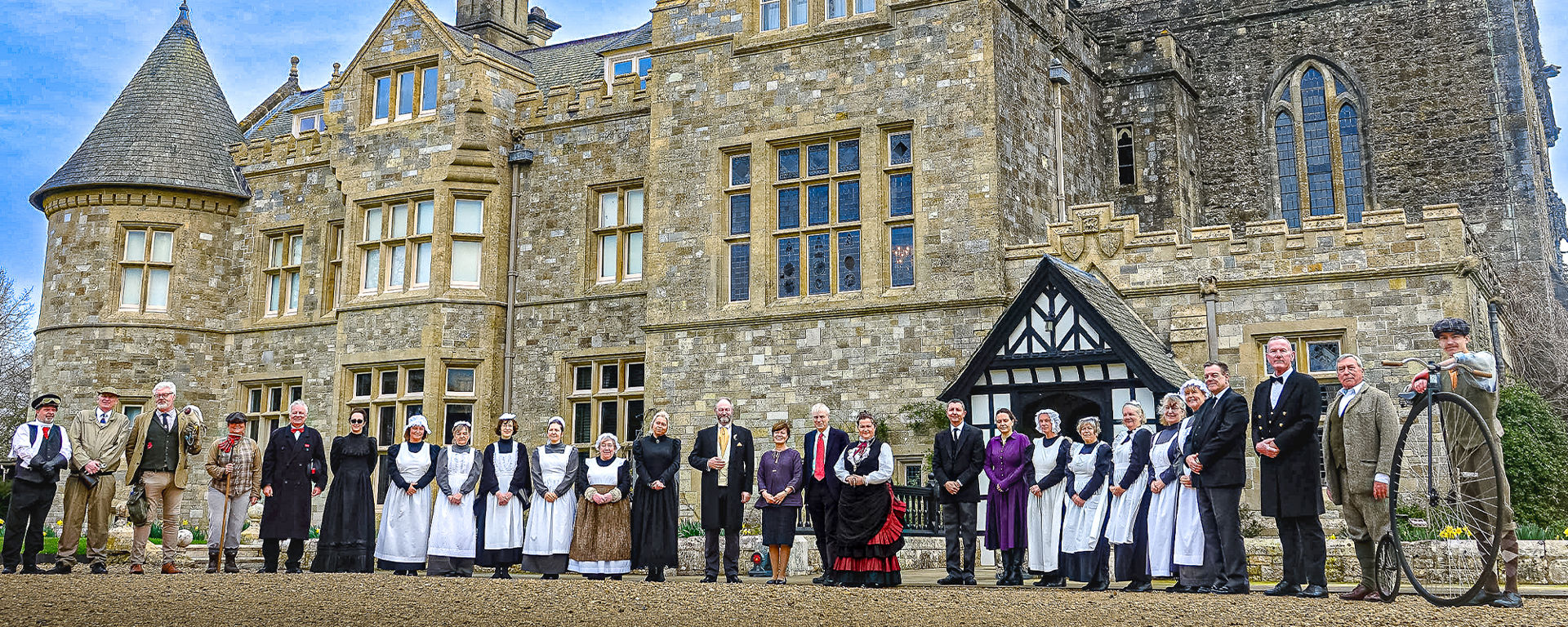 Image: Beaulieu
Palace House and Beaulieu Abbey
Palace House began as the gatehouse of Beaulieu Abbey and has been the Montagu family home since 1538, remodelled in the 1800s as a Victorian country house overlooking the Beaulieu River millpond. Close by are the conserved ruins and cloister of the Cistercian abbey founded by King John in the 13th century, set in gardens laid out over the old abbey grounds.
Why it's here: Palace House, home of the Montagu family since 1538, with a restored Victorian kitchen and the ruins of the Cistercian abbey. It is included in the single Beaulieu ticket.
 Photo: Gordon Spicer, CC BY-SA 2.0
Breamore House and Countryside Museum
An Elizabethan manor house completed in 1583, set between woodland and parkland on the western edge of the New Forest near Fordingbridge. Small guided tours take you through the state rooms and living quarters, and the Countryside Museum recreates post-war village life with farm machinery and steam engines.
Why it's here: An Elizabethan manor house completed in 1583, with guided tours at 2pm, 3pm and 4pm on Tuesdays and Sundays. The Countryside Museum recreates village life after the war.
 Photo: Alfterfoto, CC BY-SA 4.0
The Vyne
A Tudor mansion in Sherborne St John, home of the Sandys and Chute families for more than 500 years. The house has state rooms, servants' quarters and gardens, with a family trail in the autumn.
Why it's here: A Tudor mansion, home of the Sandys and Chute families for more than 500 years, with state rooms, servants' quarters and gardens. National Trust members go free.
 Image: Mottisfont
Mottisfont
Maud Russell's 1930s neo-classical interiors sit in an 18th-century house with medieval origins, set in gardens known for the Rose Garden, the Winter Garden and snowdrops. The gallery hosts changing art exhibitions.
Why it's here: Maud Russell's 1930s neo-classical interiors in an 18th-century house, set in gardens known for the Rose Garden and the Winter Garden. National Trust members go free.
Palaces and abbeys
Medieval bishops' palaces and abbey remains that are free to walk around.
 Photo: Christopher Hilton, CC BY-SA 2.0
Bishop's Waltham Palace
The remains of a grand medieval residence of the Bishops of Winchester, including a three-storey tower and the great hall windows built by William of Wykeham. The old lodging range now houses Bishop's Waltham Museum.
Why it's here: The remains of a grand medieval bishops' residence, with a three-storey tower. The grounds are free to enter, open daily from 10am to 4pm from October to March.
 Photo: Simon Burchell, CC BY-SA 4.0
Wolvesey Castle
The ruins of the Bishops of Winchester's medieval palace, beside Winchester Cathedral. Much of the 12th-century palace of Bishop Henry of Blois survives, and in 1554 its East Hall was dressed for the wedding banquet of Queen Mary and Philip of Spain.
Why it's here: Ruins of the Bishop of Winchester's 12th-century palace beside the cathedral, free to enter. The East Hall was prepared for the 1554 royal wedding banquet.
 Photo: August Schwerdfeger, CC BY 4.0
Titchfield Abbey
Titchfield Abbey was founded in the 13th century for a community of Premonstratensian canons. After the Dissolution, Henry VIII gave it to the Earl of Southampton, and its grand turreted gatehouse survives from the Tudor mansion built inside it.
Why it's here: Remains of a 13th-century abbey with a turreted Tudor gatehouse, free to enter. Non-members pay £2 to park, according to English Heritage.
Questions people ask
Which castles in Hampshire are worth visiting with children?
Hurst Castle at Milford on Sea includes school holiday trails in admission, Calshot Castle has a free children's activity pack with paid castle entry, and Southsea Castle in Southsea is free to enter.
Is Highclere Castle open all year?
No. The castle opens to the public in set periods, not year round, and tickets must be booked in advance. Guided tours run at other times of the year.
Which Hampshire stately homes are free for National Trust members?
The Vyne at Sherborne St John, Mottisfont and Hinton Ampner near Alresford are all free for National Trust members.